| ||||||||||||||

I'm changing the theme of my blog from gold prospecting too seeking gold! Any type of gold in other words any way we can make enough money to buy Gold or Silver
Showing posts with label hidden treasure. Show all posts
Showing posts with label hidden treasure. Show all posts
Friday, May 6, 2011
CALIFORNIA LEGENDS Lost Chinese Cache Volcanoville


Thursday, April 7, 2011
More California Treasures Just Waiting To Be Found
Alameda County - With a posse on their tails in 1893, two banditsallegedly buried a cache of stolen loot near a brick kiln at Adams Point on Lake Merritt. When the lawmen caught up with the outlaws, one was killed and the other immediately arrested. The surviving outlaw died later died in prison. The ill-gotten treasure has never been found. Contra Costa County - Dr. John Marsh, a California pioneer who was sometimes referred to as California's first American doctor, was allegedly known to bury his money near his home nestled in the foothills of Mt. Diablo. | 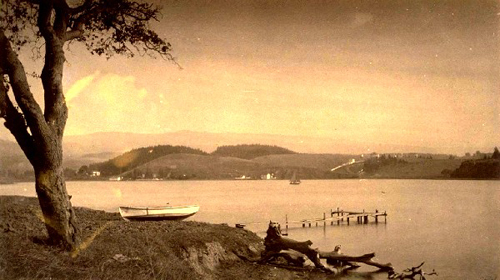 Lake Merritt from Adams Point, 1884, photo courtesy California Digital Archives. | ||||||||
| |||||||||
Saturday, March 19, 2011
Lost Treasures of Northern California
As in many places of the American West, the friction between the scores of men entering California during its Gold Rush days and the Indians was often bitter. Weary of the white men continuing to encroach upon their lands, the danger to travelers was very high when entering the California from the northeast. As the California Trail proceeded south into the SacramentoValley on the Pit River route, wagon trains and travelers were often ambushed by the natives. Bloody Springs, at the lower end of Spring Gulch, was the scene of numerous attacks, hence its name. Smaller groups were often wiped out. | 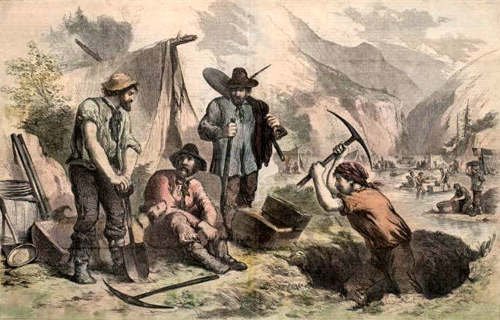 Engraving of California gold miners, John Andrew, mid 1800's. | |
| ||
Tuesday, March 15, 2011
UTAH LEGENDS Winter Quarters - Hidden Loot in a Ghost Town
| ||||||
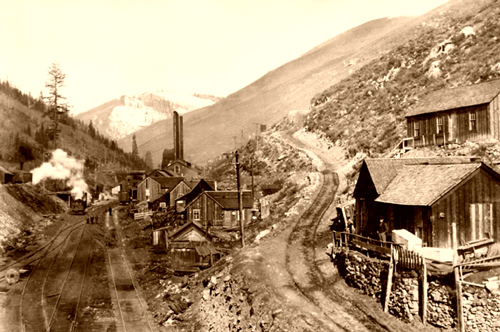
Phil Beard, John Nelson and I started No. 1 tunnel and drove the first hundred feet into the hillside. Later, thousands of tons of coal were hauled out of this entry. I helped dig from the five-foot vein, the first load of coal ever shipped out of the valley,” so said Matson in an Aug. 23, 1928 issue of The Sun newspaper, published at Price." The high mountain ghost town in extreme northwestern Carbon County, became known as Winter Quarters because John Nelson and Abram Taylor wintered there in 1875 to hold the claim they had filed. Two years later a group of men from Sanpete County came over the mountain to begin the town and continually work the mine. They intended to leave before winter, but an early snowstorm trapped the men. When their supplies ran out in February 1878, they the walked out to the north, eventually reaching the town of Tucker (now a ghost town and rest stop) in Spanish Fork Canyon. When the great tonnage of coal in the mountain was known, more people began moving into the burgeoning town. As more and more coal was mined, the need for a railroad became apparent. Some of the residents got together and bought out a dry goods firm in the east and paid railroad workers with clothing and fabrics. That old railroad bed is now a dirt road leading from the Tucker rest area on US-6 up the mountain onto what is known today as Skyline Drive and then down into Pleasant Valley. The railroad became known as the Calico Line. May Day, 1900, started out with a clear sun shinning up the valley into the town as 303 miners headed up to the mine portal. This mine was considered one of the safest in the country and had been inspected by Gomer Thomas, state mine inspector, on March 8. But at 10:15 a.m. everyone in the mountain town felt the ground shake. Some people thought someone had fired off an explosion to celebrate Dewey Day. Soon, the horrible truth spread through the town like wildfire. A giant explosion had occurred in the mine. Mothers and daughters were seen hurrying toward the mine portal, "faces blanched with fear, hoping against hope that their loved ones in some way had escaped. Soon the realization came that the miners were caught – caught like rats in a trap with no chance of escape,” reported Charles Madsen in his account of the disaster.
| ||||||

Sunday, February 27, 2011
The Lost Gold Ledge
The Lost Gold Ledge
 When the great gold strikes in Goldfield, Tonopah and Rawhide began to draw thousands of people to the Nevadadesert, they also drew a prospector named Tim Cody. Setting up a base camp at Stewart Springs about 15 miles from Goldyke, Cody quickly began to prospect the area.
 Before long, he was running low on supplies and decided to make a trip to Goldyke on an overcast winter’s morning. On foot, he began to make the long journey when a storm began to brew. In the blustery storm, he was soon lost and found shelter in an abandoned mine shaft.
Spending the night in the mine, he arose to find the storm gone and the skies clear blue. He began to climb a nearby ridge to get his bearings before continuing his journey to Goldyke. Along the way he found a rich gold vein in a quartz outcropping. Picking up some samples, Cody continued his climb to the top.
At the summit, he could clearly see Paradise Peak and Rawhide Peak to the northwest. Making his way back down to continue his trip to Goldyke, he was soon lost again, but after some difficulty he finally made his way to the settlement. After re-supplying, he returned to his base camp and tried several times to relocate the gold laden quartz vein.
However his continued searches proved fruitless and finally he moved on. However, three men showed up in 1949 with a map that Cody had supposedly drawn for them. The three scoured the area looking for the lost ledge, but they too, were unable to find the rich vein of gold.
Today, the legend continues. The lost ledge is said to be somewhere in the hills south of Gabbs. Perhaps, you will be the lucky prospector to find it again.
Joining the thousands of "49ers” rushing intoCalifornia were brothers, Charles and Joshua Breyfogle. Hailing from Lockhart, New York, the pair headed west with a train of saddle and draft horses and two wagons in the spring of 1849. They soon teamed up with other pioneers inColumbus, Ohio and continued their long journey to the California goldfields. After many trials and tribulations through theIndian ridden plains, steep mountains, and harsh desert, they finally reached Sacramento on August, 14, 1849. About a month later the Breyfogles began searching for their fortunes in the promising areas of Butte Creek and the Chico River. Having no success, they had moved on to the YubaRiver, some 12 miles above the California gold rush tent city of Marysville, in January, 1850. | 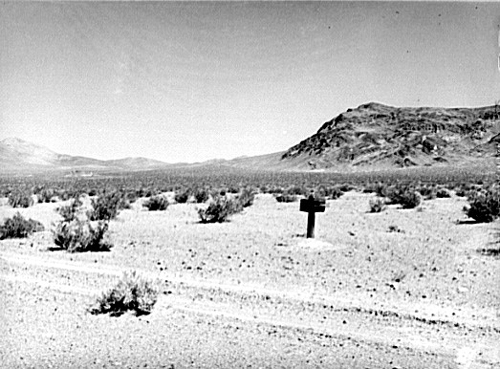 Many believe the lost Breyfogle Mine is in Nye County, Nevada. | |||||
| ||||||

Saturday, January 29, 2011
More California Treasures Just Waiting To Be Found
Alameda County - With a posse on their tails in 1893, two banditsallegedly buried a cache of stolen loot near a brick kiln at Adams Point on Lake Merritt. When the lawmen caught up with the outlaws, one was killed and the other immediately arrested. The surviving outlaw died later died in prison. The ill-gotten treasure has never been found. Contra Costa County - Dr. John Marsh, a California pioneer who was sometimes referred to as California's first American doctor, was allegedly known to bury his money near his home nestled in the foothills of Mt. Diablo. | Lake Merritt from Adams Point, 1884, photo courtesy California Digital Archives. | ||||||||
| |||||||||
Subscribe to:
Posts (Atom)